
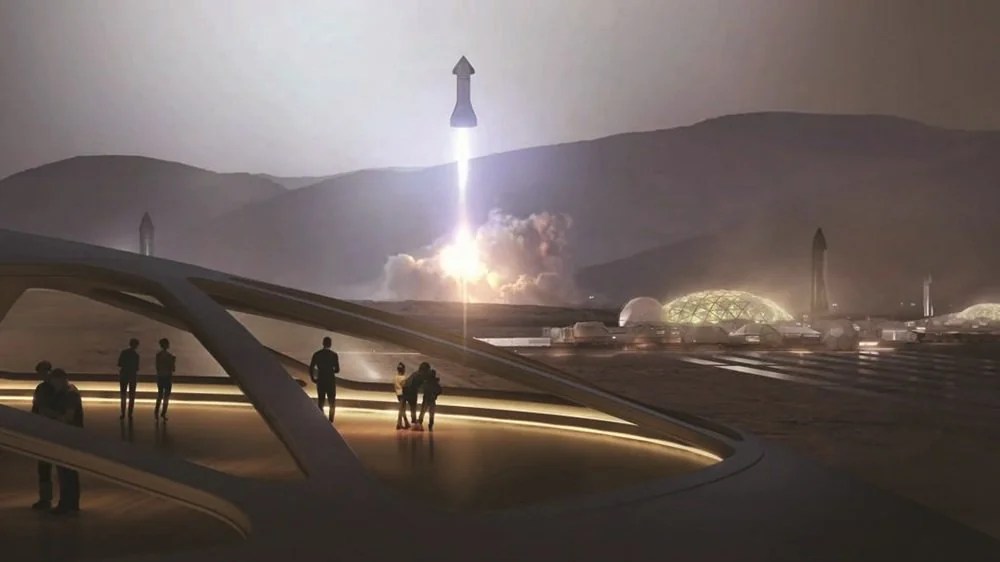
The idea of humans living on multiple planets has been a staple of science fiction for decades. From the worlds of “Star Trek” to “The Expanse,” the dream of expanding beyond Earth has captivated our imaginations. However, in recent years, this dream has moved closer to reality as technological advancements, private space exploration, and renewed interest from global space agencies push us toward a future where life on multiple planets is no longer a distant fantasy.
But when will this become a reality? And, more importantly, how will living on other planets change the human race?
The Timeline: When Can Humans Expect a Multiplanetary Life?
1. The First Step: Moon Colonization
A key stepping stone to becoming a multiplanetary species will be returning to the Moon, not just for exploration but for settlement. NASA’s Artemis program aims to land astronauts on the Moon by 2025, with plans to establish a sustainable human presence by the end of the decade. The Moon will serve as a vital testing ground for the technology, infrastructure, and logistics required to live on other planets.
By 2030, we could see the first lunar bases, where astronauts and eventually private citizens could live and work for extended periods. These early lunar colonies will provide insights into building life-support systems, habitats, and supply chains, all essential for Mars and beyond.
2. Mars: The Next Frontier
While the Moon is within reach, Mars is where humanity will truly become multiplanetary. SpaceX, led by Elon Musk, has the ambitious goal of sending humans to Mars by the 2030s. NASA’s more conservative estimate places human missions to Mars in the late 2030s or early 2040s. With these missions, we will explore the feasibility of establishing a self-sustaining Martian colony.
A Mars colony will require advanced technology, such as life-support systems that can recycle air and water, sustainable agriculture to grow food, and habitats capable of protecting humans from radiation and extreme weather. Establishing permanent settlements on Mars will take decades, but by the 2050s, we could see the first Mars cities take shape.
3. Beyond Mars: The Outer Solar System and Exoplanets
Mars may not be the final frontier. Once we establish a presence on Mars, humanity will likely look further afield, exploring the moons of Jupiter and Saturn, such as Europa and Titan, which are believed to have subsurface oceans that could potentially support life. These missions, however, may not happen until the second half of the 21st century.
Looking even further ahead, astronomers have discovered thousands of exoplanets orbiting other stars, some of which lie in the “habitable zone,” where conditions might be right for life. Travel to these distant worlds remains a dream for now, as our current technology would take thousands of years to reach even the closest star systems. However, breakthrough propulsion technologies—such as nuclear fusion or even concepts like warp drives—could change that within the next few centuries.
The Challenges of Multiplanetary Life
While the timeline for multiplanetary life might seem optimistic, the challenges remain immense. Life beyond Earth presents unique difficulties that we’ve only begun to address.
1. Psychological and Social Challenges
One of the greatest hurdles for long-term space habitation is not just physical but psychological. Humans have evolved to live on Earth, and living on another planet, especially in confined environments for extended periods, will have profound effects on mental health. Isolation, distance from loved ones, and the lack of natural Earth environments could lead to increased stress, depression, and other mental health issues.
Socially, living in small, confined colonies on another planet will test the limits of human cooperation. Conflicts over resources, leadership, and even cultural or ideological differences could arise. These issues will need to be addressed through thoughtful planning, governance structures, and the development of strong social bonds within space communities.
2. Biological and Health Impacts
Humans are biologically adapted to Earth’s gravity, atmosphere, and magnetic field. On Mars, where gravity is only about 38% of Earth’s and the atmosphere is thin and unbreathable, long-term exposure could affect human health. Prolonged periods in low gravity could lead to muscle atrophy, bone density loss, and cardiovascular issues. Radiation from the Sun and cosmic rays, which are mostly blocked by Earth’s magnetic field, could significantly increase the risk of cancer and other health problems.
Scientists are already studying these effects on astronauts aboard the International Space Station, but living permanently on another planet presents new challenges. Future technologies, such as artificial gravity habitats and advanced medical treatments, may help mitigate these effects.
How Will a Multiplanetary Life Change Humanity?
As we expand into space, the very nature of human civilization will undergo dramatic changes, reshaping everything from our culture to our biology.
1. A New Species?
Over time, humans living on other planets may evolve differently due to the new environments they inhabit. In lower gravity environments like Mars, for example, humans could develop taller, more slender bodies. Mars’ radiation exposure might even lead to subtle genetic changes. After generations, humans living on Mars or other worlds may become physically distinct from those on Earth, potentially giving rise to what could be considered a new human species.
2. Cultural and Political Evolution
New planets will also mean new cultures. A Martian colony, for example, might develop its own unique language, customs, and societal structures. As populations grow on different planets, these cultures could diverge significantly from Earth-based norms. How we govern multiplanetary life will also be a crucial issue. Will Martian colonies operate independently, or will they remain under Earth’s jurisdiction? Will we see the rise of interplanetary governments or federations?
Space exploration may also push humanity toward a more united global identity. The idea of “Earth” as a single entity, rather than a collection of nations, could gain more traction when viewed from the perspective of interplanetary colonists. However, conflicts over resources, political ideologies, and cultural differences could also spread to space, raising the possibility of future interplanetary disputes or even wars.
3. The Final Frontier for Human Potential
Living beyond Earth will fundamentally change how we view ourselves as a species. The challenges of survival in space could push technological innovation to new heights, spurring advancements in artificial intelligence, biotechnology, and energy. It may also transform our philosophical and spiritual perspectives. As we venture deeper into the cosmos, questions about humanity’s place in the universe will become more pressing. Could we encounter other forms of life? How will we react if we do?
Becoming a multiplanetary species might also force us to confront issues of inequality and sustainability on Earth. As we colonize other planets, will space become a playground for the wealthy elite, or will it be accessible to all? How we address these issues on Earth will shape the ethics and fairness of our future in space.
The Dawn of a Multiplanetary Humanity
While the timeline for multiplanetary life is uncertain, there’s no doubt that humanity is on the cusp of a new era. The next few decades will be critical as we develop the technology, infrastructure, and governance needed to establish permanent human presence beyond Earth.
The challenges are immense, but so are the rewards. Living on other planets will not only change our biology and culture but also force us to redefine what it means to be human. In the process, we may become more united as a species, more innovative, and more conscious of our role in the universe.
For now, our focus is on the Moon and Mars, but as we continue to push the boundaries of exploration, the idea of humans living across the stars will no longer be a matter of “if” but “when.”

 Daniel Molgan Official