In today’s fast-paced world, stress often feels like a constant companion. We juggle deadlines, social obligations, notifications, and responsibilities—sometimes all at once. But while we often look outward for solutions, one of the most effective ways to reduce stress lies within our immediate control: clearing clutter, both physical and mental. Let’s explore how simplifying our environment and our minds can bring a deep sense of peace and clarity.
1. The Invisible Weight of Clutter
Clutter isn’t just about messy rooms or overflowing inboxes. It’s a form of visual and cognitive noise. Studies show that disorganized spaces can elevate cortisol levels—the stress hormone—especially in women. When our surroundings are chaotic, our brains struggle to focus, and our ability to relax is compromised.
2. Physical Clutter: Start With What You See
Here’s how clearing physical space can lead to mental relief:
Declutter One Space at a Time: Start with your desk, closet, or even your car. Remove what you don’t need, and organize what remains. A clean, intentional space gives your mind room to breathe.
Adopt the “One In, One Out” Rule: For every new item you bring into your space, remove one. This helps maintain balance and avoids accumulation.
Create a Sanctuary Zone: Designate one area of your home to remain clutter-free—no matter what. It can be your bed, a reading nook, or your kitchen counter. This becomes your visual and emotional reset button.
3. Mental Clutter: Clear the Mind to Calm the Body
Mental clutter comes in the form of racing thoughts, endless to-do lists, and unresolved worries. Here’s how to clear it:
Brain Dump: At the end of the day, write down everything that’s on your mind—tasks, worries, ideas. This simple act externalizes the noise and helps you sleep better.
Limit Decision Fatigue: Simplify daily choices. Plan meals ahead of time, lay out your clothes the night before, and use checklists.
Use Mental Folders: Break your worries into categories, work, health, finances, relationships. You’ll realize that not everything is urgent and some things can wait.
Meditate or Breathe With Purpose: Even five minutes of conscious breathing can slow your heart rate and calm your nervous system.
Declutter Your Mind and Life
Reducing clutter—both in your surroundings and in your thoughts—is not just about neatness or minimalism. It’s about creating space for calm, clarity, and intentional living. When you clear the excess, what remains is what truly matters.
If you’ve ever found yourself lying awake at night wondering, “What am I really meant to do with my life?” you’re not alone. We’ve all been there. Whether you’re in your twenties trying to figure out your path, or in your forties feeling like you took a wrong turn somewhere, the search for your life’s calling is deeply personal, and often confusing. But the good news? You can find it. You just have to be willing to listen to yourself more than you listen to the noise. Here’s a grounded, no-fluff guide to discovering your calling in life.
1. Stop Chasing What Looks Good and Start Noticing What Feels Right
Let’s be honest: it’s easy to chase titles, salaries, or the things that sound impressive. But your calling isn’t always shiny or socially approved. It’s that thing that lights you up, even if it doesn’t make sense to other people. Pay attention to moments when you feel most you. That’s the real signal. Try this: Think back to the last time you were so into something that you lost track of time. What were you doing? That’s not random. That’s a clue.
2. Audit Your Curiosity
Your calling often hides behind your curiosity. The stuff you randomly research late at night, the podcasts you binge, the topics you bring up in every conversation, even if it seems trivial—is where the gold is. Tip: Keep a “Curiosity Journal” for a week. Write down everything that grabs your attention, even if it feels silly. Patterns will show up.
3. Experiment Boldly, Fail Fast
The myth that your calling will show up one day like a divine message is just that, a myth. You find it by doing, not overthinking. Try internships, side hustles, volunteer work, or passion projects. Don’t wait to be ready. You’ll never feel 100% ready. Jump in anyway.
4. Listen to Your Inner Voice Over Outer Expectations
Everyone has an opinion about what you should do. But only you have to live your life. If you’re trying to live up to someone else’s version of success, you’ll always feel off. Your calling isn’t a performance, it’s an alignment. Ask yourself: If no one ever judged me or questioned my choices, what would I pursue?
5. Notice What You Can’t Not Do
Some things keep pulling you back no matter how many times you try to ignore them. Maybe it’s writing. Maybe it’s helping people through tough times. Maybe it’s designing things, or solving messy problems. If it keeps resurfacing, it’s not a hobby. It might be your purpose knocking.
6. Don’t Confuse Calling With Career
Your calling doesn’t always mean your job. You might find purpose in parenting, mentoring, creating, organizing, or healing—even if your day job pays the bills in the meantime. The goal is to bring your calling into your career eventually, or let it run parallel until it grows into something bigger.
7. Give It Time But Stay In Motion
Finding your calling isn’t a one-time event. It unfolds. You’re not late, and you’re not behind. But you do need to stay active. Try things. Reflect. Pivot. Repeat. Keep learning and evolving. Life has a funny way of connecting the dots when you keep showing up.
Find your calling
Your calling isn’t hiding from you—it’s waiting for you to slow down, listen, and trust what you find. It’s not about being extraordinary. It’s about being authentically you. And once you lock into that, everything starts to shift. So ask the real questions. Follow the sparks. Trust your gut. And give yourself the grace to figure it out one step at a time. You’ve got this.
Happiness is often seen as a destination, a goal to be achieved, something we pursue through success, relationships, or material wealth. But the true art of happiness lies not in external achievements but in cultivating an inner state of contentment, gratitude, and purpose.
Rethinking Happiness: It’s a Practice, Not a Prize
One of the biggest misconceptions about happiness is that it is a result of external circumstances. People often believe that once they get a better job, find the perfect partner, or accumulate enough wealth, they will finally be happy. But studies in positive psychology suggest that happiness is more about how we perceive life than about what happens to us.
Happiness is an art, something that requires active participation and regular practice. Just as a painter refines their craft over time, we can cultivate happiness by developing habits that nurture positivity and well-being.
The Ingredients of a Happy Life
1. Gratitude: The Key to Perspective
Gratitude is one of the simplest yet most powerful ways to shift our mindset. When we focus on what we have instead of what we lack, we train our brains to see abundance rather than scarcity. Studies have shown that people who practice gratitude regularly experience greater life satisfaction and lower levels of stress.
Practice Tip: Start a gratitude journal and write down three things you’re thankful for each day.
2. Purpose and Meaning
Happiness is deeply connected to having a sense of purpose. People who engage in meaningful activities—whether through work, hobbies, or acts of kindness—tend to report higher levels of happiness. Instead of seeking fleeting pleasures, ask yourself: What gives my life meaning? What makes me excited to wake up in the morning?
Practice Tip: Identify an activity or cause that aligns with your values and commit to it regularly.
3. Mindfulness: Living in the Present
A large part of our unhappiness stems from regrets about the past or anxieties about the future. Mindfulness, the practice of being fully present in the moment—helps us embrace life as it is. When we slow down and truly experience the present, we find joy in simple things: a deep conversation, the warmth of the sun, or the laughter of a loved one.
Practice Tip: Spend five minutes each day in mindful breathing or meditation. Focus on the sensations around you and let go of distractions.
4. Strong Relationships and Social Connection
Humans are wired for connection. Research consistently shows that strong social bonds contribute more to long-term happiness than wealth or fame. Prioritizing quality relationships with family, friends, and community members enhances well-being and provides a support system during difficult times.
Practice Tip: Make time for meaningful conversations and deep connections. Call a friend or spend time with loved ones without distractions.
5. Resilience: Embracing Imperfections
Life is not always smooth, and true happiness comes from learning to navigate challenges with grace. Resilience is the ability to bounce back from setbacks and find meaning in difficulties. Instead of resisting life’s struggles, embrace them as opportunities for growth.
Practice Tip: When faced with challenges, ask yourself: What can I learn from this experience? How can I use this to grow stronger?
Happiness is a Journey, Not a Destination
Happiness isn’t something we stumble upon; it’s something we create every day through our mindset and choices. It’s about embracing life fully, the joys and the struggles—and finding beauty in the little moments.
The art of happiness is a lifelong masterpiece, painted with gratitude, purpose, mindfulness, connection, and resilience. And the best part? You are the artist.
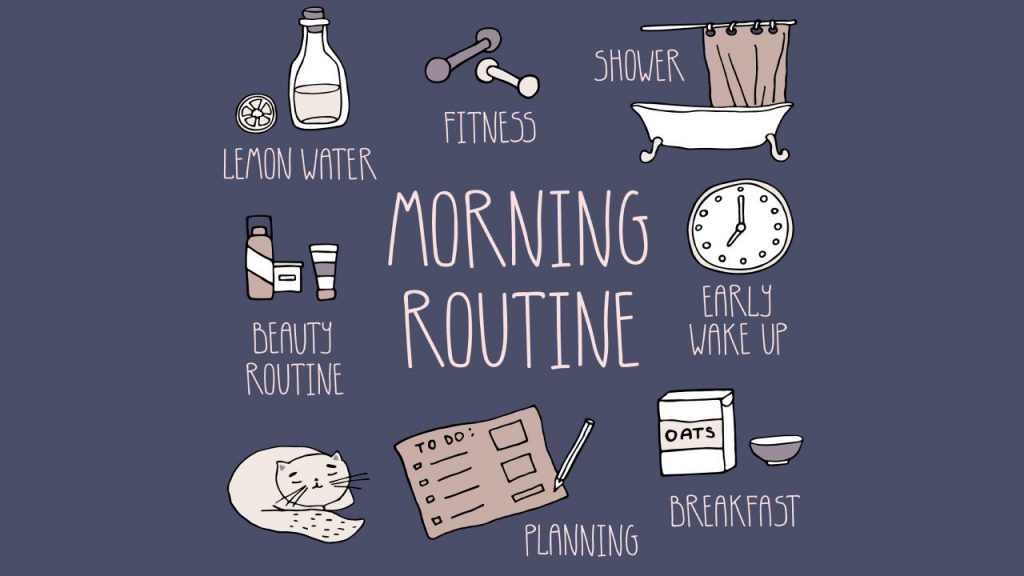
How you start your morning sets the tone for the rest of your day. A well-structured morning routine can improve your productivity, boost your mental and physical health, and enhance your overall well-being. While everyone’s ideal morning routine may differ, the core benefits remain the same: clarity, discipline, and momentum.
Why a Good Morning Routine Matters
1. Boosts Productivity and Focus
A well-planned morning routine allows you to begin your day with intention. Instead of rushing through tasks in a frantic state, you start with a structured approach, ensuring that your most important priorities get attention. Studies show that people who follow a morning routine tend to be more focused and efficient throughout the day.
2. Reduces Stress and Anxiety
Waking up late and scrambling to get out the door creates unnecessary stress. A structured morning routine eliminates that chaotic feeling and gives you a sense of control. When you begin your day calmly, you are less likely to feel overwhelmed and more equipped to handle challenges.
3. Promotes Physical and Mental Well-being
Incorporating healthy habits into your morning—such as exercise, stretching, deep breathing, or meditation—can significantly improve your mental and physical health. Regular movement boosts energy levels, enhances cognitive function, and releases endorphins, which improve mood and reduce stress.
4. Encourages Discipline and Consistency
Discipline is the foundation of long-term success. A morning routine builds good habits by reinforcing discipline. Over time, the simple act of waking up early, exercising, reading, or journaling strengthens your ability to stick to commitments in other areas of life.
5. Sets a Positive Tone for the Day
How you start your morning impacts how you feel for the rest of the day. A chaotic morning often leads to frustration and lack of focus, whereas a well-planned routine fosters positivity and motivation. Starting the day with gratitude, self-reflection, or a personal ritual can help you maintain a positive mindset.
Key Elements of an Effective Morning Routine
Creating a powerful morning routine doesn’t mean you have to wake up at 5 a.m. and follow a rigid checklist. The key is consistency and aligning your habits with your personal goals. Here are some essential elements to consider:
1. Wake Up Early (But Get Enough Sleep!)
The most successful people start their day early, but waking up early means nothing if you’re sleep-deprived. Aim for 7–9 hours of quality sleep and wake up at a time that allows you to ease into your day.
2. Hydrate First Thing
After several hours of sleep, your body is dehydrated. Drinking a glass of water first thing in the morning helps rehydrate your body, kickstarts your metabolism, and improves brain function.
3. Move Your Body
Exercise is one of the most powerful ways to boost energy and mental clarity. Whether it’s a full workout, yoga, stretching, or a brisk walk, movement helps wake up your body and mind.
4. Practice Mindfulness or Gratitude
Take a few minutes to reflect, meditate, or practice gratitude. This simple habit shifts your focus from stress and negativity to positivity and intention. Journaling, deep breathing, or simply sitting in silence can be transformative.
5. Eat a Nutritious Breakfast
Food fuels your brain and body. Avoid processed foods and opt for a balanced breakfast with protein, healthy fats, and fiber to sustain your energy levels throughout the day.
6. Plan Your Day
Before diving into work or social media, take a moment to outline your priorities. Writing down your top tasks or reviewing your schedule ensures that you stay on track and minimize distractions.
7. Limit Screen Time
Many people wake up and immediately check their phones, exposing themselves to stress, negative news, or distractions. Instead, delay screen time and focus on your own thoughts and goals first.
How to Build a Morning Routine That Works for You
1. Start Small – If you’re not used to a structured morning routine, introduce new habits gradually. Small changes are more sustainable than a complete overhaul.
2. Be Realistic – Your routine should fit your lifestyle. If you’re not a morning person, a 5 a.m. wake-up call might not be the best strategy. Find a rhythm that works for you.
3. Stay Flexible – Life happens, and sometimes routines get disrupted. Instead of abandoning the habit altogether, have a flexible mindset and adapt when necessary.
4. Track Your Progress – Journaling or using habit-tracking apps can help you stay accountable and notice improvements in your mood, energy, and productivity.
5. Enjoy the Process – A morning routine should energize and inspire you, not feel like a burden. Find habits that make you feel good and excited to start the day.
Start the Day Right
A great morning routine isn’t about perfection—it’s about consistency and intention. By designing a routine that aligns with your goals and values, you can transform your days from rushed and reactive to calm and productive. Start small, stay consistent, and watch how a well-structured morning sets the foundation for success in every aspect of your life.
In a world full of noise, opinions, and societal expectations, understanding what truly matters to you is both a challenge and an opportunity. Values act as your internal compass, guiding your decisions, behaviors, and relationships. Discovering them is a deeply personal journey, but one that can unlock a sense of purpose and clarity in your life. Here’s a step-by-step guide to help you uncover your core values:
Reflect on Pivotal Moments
Think back to key moments in your life—both triumphs and challenges. Ask yourself: What made these moments meaningful or difficult? How did you react, and why? What did these experiences teach you about what matters most? For example, if you felt deeply fulfilled helping a friend through a tough time, compassion or service might be one of your values.
Identify What Energizes You
Pay attention to the activities, conversations, and environments that leave you feeling alive and inspired. Similarly, note what drains or frustrates you. The things that excite you often align with your values, while the things that repel you may reflect a lack of alignment with them.
Examine Your Role Models
Who do you admire, and why? Role models often embody traits and principles we aspire to uphold. Whether it’s their courage, generosity, or integrity, these qualities can offer insight into your own values.
Look for Patterns
Start a journal to document your daily experiences. Over time, patterns will emerge. For instance, you might notice that you consistently value honesty in your interactions or feel happiest when you’re learning something new.
Engage in Values Exercises
Try structured exercises, such as: Values Card Sorts: Rank a set of potential values to determine which resonate most. Prompt-Based Writing: Answer questions like, “What would I want to be remembered for?” or “What would I do if I didn’t fear judgment?”
Seek Feedback
Sometimes, others see us more clearly than we see ourselves. Ask trusted friends, family, or mentors to share what they perceive as your guiding principles based on your actions and choices.
Test Your Values
Values are more than words—they’re actions. To ensure a value truly resonates, put it into practice. For example, if you believe you value adventure, take steps to incorporate spontaneity into your life and observe how it feels.
Refine and Prioritize
You may discover many values, but not all will hold equal weight. Narrow your list to 3–5 core values that are most essential to who you are. These will be your guiding lights.
Revisit and Evolve
Values aren’t static. Life experiences, personal growth, and changing priorities can shift your values over time. Make it a habit to periodically revisit your list and assess whether it still reflects your true self.
Why Discovering Your Values Matters
Living in alignment with your values brings a sense of authenticity and peace. Decisions become easier, relationships grow stronger, and you gain the confidence to pursue a life that feels uniquely yours. By understanding and honoring your values, you create a roadmap for a life filled with purpose and fulfillment. Start your journey today, because knowing who you are is the first step to becoming your best self. What values drive you? Share your insights in the comments below!





 Daniel Molgan Official