
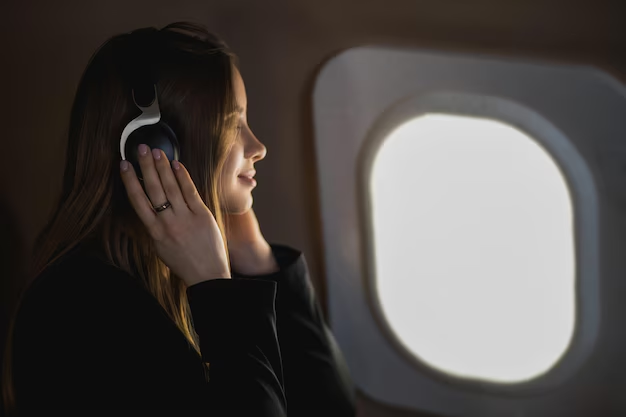
In our fast-paced world, time has become one of our most valuable resources. Whether you’re commuting to work, taking a road trip, or flying cross-country, you may be spending hours each week behind the wheel or in the air. While this time is often viewed as “lost” or unproductive, there’s an incredibly simple way to turn it into a powerful opportunity for learning: audiobooks.
Here’s how audiobooks can transform your travel time into an enriching and educational experience:
1. Expand Your Knowledge Effortlessly
Imagine absorbing new concepts in philosophy, learning a new language, or diving into the latest insights on leadership, all while driving to work. Audiobooks allow you to engage with topics you’re passionate about or learn something entirely new, without needing to set aside extra time in your busy schedule.
Audiobooks cover a vast range of subjects, from fiction to non-fiction, self-development to scientific research, history to biographies. No matter your interests, there’s an audiobook out there to satisfy your curiosity.
2. Maximize Time in Transit
According to the AAA Foundation for Traffic Safety, the average American spends nearly 300 hours driving each year. Combine that with hours spent waiting at airports or sitting in flights, and you’ll find a significant portion of your time is spent traveling. Audiobooks can help you reclaim that time. Instead of passively enduring traffic or idly waiting for your flight to land, you can engage with a book, allowing you to make progress toward your personal or professional development goals.
3. Boost Your Productivity
Time is money, and one of the best ways to stay productive is by turning otherwise idle moments into learning opportunities. With audiobooks, you can multitask without sacrificing the quality of your experience. Whether it’s gaining new skills or brushing up on industry trends, you’ll leave your drive or flight feeling more accomplished than if you had simply listened to the radio or watched in-flight entertainment.
4. Stress-Free Learning
Unlike traditional reading, which requires your full attention, audiobooks allow you to learn in a relaxed, hands-free manner. When you’re driving or flying, this is especially important. Listening to a book can help you unwind, make long journeys more enjoyable, and even reduce stress levels. Audiobooks are also great for breaking up the monotony of a long trip, keeping your mind engaged and alert without adding pressure to your travel experience.
5. Enhance Your Focus and Retention
Audiobooks can also help improve your focus and retention of material. Some people find that they absorb information better through listening, especially if they struggle to find time to sit down and read. By listening to complex topics or ideas multiple times during your commute, you’re more likely to retain the information over the long term.
6. An Endless Library at Your Fingertips
Gone are the days of lugging heavy books in your carry-on or getting bored with the same playlist during a long road trip. With audiobooks, you can carry an entire library on your smartphone or tablet. Audiobook platforms like Audible, Google Play Books, and Scribd offer thousands of titles that are accessible with just a few taps. Many public libraries also offer free access to audiobooks via apps like Libby and OverDrive.
7. Turn Dead Time Into Personal Growth
Listening to audiobooks is a perfect way to turn “dead time” into personal growth. Whether you want to develop a new hobby, learn about investing, improve your communication skills, or get inspired by the life stories of successful people, audiobooks provide endless opportunities to grow while you’re on the go.
8. Accessibility and Flexibility
Audiobooks are also a great option for those who find it challenging to read physical books, whether due to time constraints, visual impairments, or a hectic lifestyle. They offer flexibility—letting you pause, rewind, and control the pace to match your learning needs. You can choose to speed up a narrator’s voice when reviewing familiar topics or slow it down to take in complex information at your own pace.
Using your travel time wisely
The time you spend driving or flying doesn’t have to be wasted. By incorporating audiobooks into your routine, you can transform these moments into valuable learning experiences. Whether you’re looking to grow personally, advance your career, or simply enjoy a good story, audiobooks allow you to maximize your time and keep your mind engaged, even when life keeps you on the move.
So next time you’re stuck in traffic or waiting to board your flight, pop in your earbuds and let your audiobook transport you to a world of knowledge and discovery.

 Daniel Molgan Official