Personal Development

A Clarification on Doing What We Love

One of the biggest misconceptions in the world of personal development is regarding doing what we like to do. We are told that to be successful one should do what he or she loves and many take that statement and interpret it as “I should enjoy whatever I do all the time or else I am not doing the right thing” which is a false interpretation of the aforementioned recommendation.

Doing what we love or loving what we do even if what we do is not enjoyable at the moment?

If the end goal is to do what you like doing then the means to that end is to what you don’t like at all! This statement seems overly simple on the surface but in fact it is one of the hardest notions to truly fathom and internalize on an emotional level. Think of one thing that you really like doing, it could be absolutely anything be it traveling, sleeping over on the weekend, watching your favorite movies, getting a good massage, or eating your favorite meal. Even such highly enjoyable activities will inevitably involve doing things that you don’t like doing. For instance, to travel which is something that you do enjoy you have to do things like booking, planning, packing your bags, going through the boring process of obtaining a visa if the country you are traveling to requires one, waiting in long lines, putting up with delayed or long flights, occasionally get lost in a city or lose an item or document, and many such things that you don’t like but without them you will never get to enjoy the wonders of traveling.

The joy of traveling, like the joy of most other desirable experiences in life, will always involve taking steps that one will not enjoy but has to do regardless in order to have that experience

A similar approach can be used to describe all other aforementioned examples and if we take a look at more worthy ideals from graduation and making a business profitable to having the body of your dream or a satisfactory relationship you will inevitably have to do many things that you don’t like in order to finally get to do what you do like and often you have to do the things that you don’t like first, do them more often, and keep doing them for as long as you pursue your goals.

It is naive to assume that once you discover a goal or a profession that you love then you can enjoy every minute of every day in its pursuit. This naïveté not only wrongfully makes the natural process of goal attaining, which inevitably involves doing things that you don’t like, seem out of place but also could send people on a wild goose chase of constantly looking for another goal or profession that they enjoy doing all the time without ever finding it.

Achieving goals will always involve an element of work. Just like in farming the toil of working on the field precedes the joy of harvesting

Yes, you must set goals and find professions that you absolutely love and yes it is crucial for the work to be cognitively meaningful and emotionally fulfilling for you; however, you cannot and should not expect to enjoy everything you do on the way to accomplishing them. Steve Jobs is perhaps the most renowned figure when it comes to this issue as he not only did what he loved at Pixar and Apple but also recommended everyone to do the same. He once said: “ Your work is going to fill a large part of your life, and the only way to be truly satisfied is to do what you believe is great work. And the only way to do great work is to love what you do”.

His love for what he did not only enriched Steve’s life but also put a “major dent in the universe” as he had wished all along. Yet a quick glance at his magnificent life reminds us that on the way to realizing his mission and as part of the very work that he loved to do Steve Jobs underwent many trials and dire situations that he did not like at all, just imagine being ousted out of the company that you have created yourself, going through many legal battles, constantly having the media criticize and judge your every move, not to mention the other issues that would have made focusing on his work difficult such as serious family issues and even cancer.

Steve Jobs achieved his success by doing what he loved but while doing what he loved he also endured many setbacks that he clearly didn’t enjoy but the sense of meaning and the love of his goals helped him to keep moving forward during tough times

Once we understand that doing what we like doing requires us to spend a great deal of time doing the things that we do NOT like, sometimes for years, we avoid the trap of confusing doing what we love with doing what we enjoy all the time since while the former is the worthiest of all aims the latter is but an illusion. In order to do what you like, you have to also do what you don’t like and once you internalize this lesson not only will you be more resilient in face of the inevitable obstacles ahead but can also get to doing what you really like much faster!

Daniel Molgan
Written by Daniel Molgan


#success #motivation #inspiration #mindset #entrepreneur #resilience #Danmolgan #Danielmolgan

Personal Development

Growth and Transcendence, the Maslow Way!


We all have been told that the path towards our dreams is paved by sacrifices that demand suffering but is this wide spread statement, which by now is common sense, actually true? While there’s no doubt that achieving big goals indeed requires one to commit many resources, ranging from time and energy to money and the help of others, in order to achieve the goal but the feeling associated with making a sacrifice is by no means a necessity to achieve insurmountable objectives.

We don’t always choose our problems as they could occur without our concern or desire but suffering is a choice that we can restrain from making as we deal with unwanted problems

It is said that undergoing hardship is not always a choice as we could involuntarily get involved with adversity; however, suffering is always a choice as it is not a result of our struggle with misfortune but rather a state of mind that makes us see ourselves as victims and interpret the situation as a cause for suffering. There is no doubt that a life devoid of problems simply doesn’t exist and even if it did most people would eventually come to resent it as seen through the researches that depict reduced life satisfaction among retirees who live their lives mostly in front of TV or in grocery stores as opposed the ones who take on new ventures or even go on as far as starting new hobbies if not careers.

The human mind is a problem solving tool and in the absence of meaningful problems to solve in order to advance one’s interest the mind loses its zest for living which could eventually cripple the individual’s motivation and cause him or her to see the world as a victim. Knowing this, it becomes a lot easier to understand why having problems in life is normal as well as necessary and this acknowledgement ultimately makes us less susceptible to experiencing negativity upon dealing with our day to day problems.

Most of us would admit that we love solving problems so long as they are the problems that we want to solve, yet in the majority of cases we undergo much more growth of character and skill upon dealing with problems that we don’t want as they inevitably push us out of our comfort zones and make us do things we don’t want to do hence the reason why we don’t like them in the first place. It is in this process of doing what we don’t like doing that we end up discovering some abilities that we never thought we had and such discoveries are usually the most satisfying and transcendental experiences of our lives that we rarely undergo if we were limited to only solving the problems that we like.

Mental toughness is one’s ability to stay focused on solving undesirable problems and escaping crises instead of lamenting their presence

Nobody would wish for losing a job, being diagnosed with a serious ailment, having a fight with a family member, getting into an accident, having to wait for long periods for paperwork, or facing with a pandemic but such events in our lives are ironically the ones that teach us some of the most important lessons that we ever learn and can later use in other areas of our lives. It is by letting go of our resistance and accepting the situation as it is rather than as how it should have been that we stop suffering and promptly start taking action to improve the situation while learning invaluable lessons as we do so.

If you take a look back at your life you realize that the biggest changes in your life in most cases followed a major crisis or a sudden change that compelled you to do things you hadn’t done before or face with consequences you would have done almost anything to avoid. The reason behind this phenomenon is that we humans are creatures of habit for clear evolutionary reasons and as thus see every change or new problem as a threat to be avoided, alas our brains have not evolved to make us happy but rather to prolong our physical survival and this tendency can lead to great angst upon facing with unwanted or undesirable setbacks or obstacles.

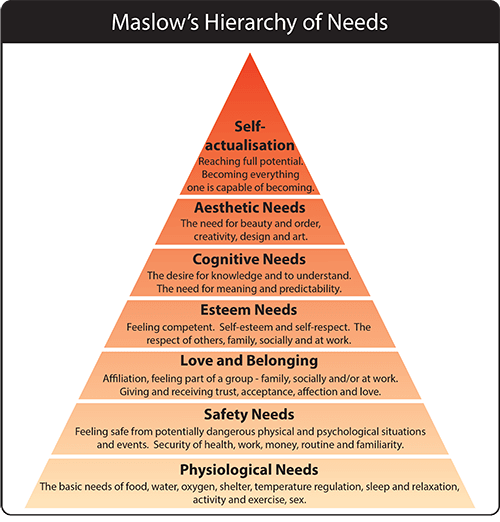
Moving upward towards the peak of the Maslow pyramid is what we all want but it is often through dealing with serious challenges and overcoming disheartening obstacles that we make our way up

The key out of this self-imposed prison is using this knowledge to aim for growth instead of excess comfort and transcendence instead of excess security and look at the issues that we are struggling with not as a waste but rather a chance for growing into a better version of ourselves. The individuals who harbor this belief tend to be far more resilient when things go south and actually experience more positive emotions as they go through the process of solving their problems and report increased levels of self-esteem whether they can successfully resolve the issue or not.

After all, it is progress that makes us exited and progress is the very byproduct of dealing with our problems with a growth mindset that makes us aware of the inevitable improvement in our physical and emotional strength along with our abilities and skills that we acquire as we go through the battles of life. That joy of growth is unmatched by any other joy in life and it is my sincere wish that you the reader will invite more of that joy into your life through your attitude upon facing with any and all unwanted dilemmas!

Written by Daniel Molgan


#success #motivation #inspiration #growth #personaldevelopment #perspective #Danmolgan #Danielmolgan

Personal Development

Beyond Gross Domestic Product

When I was a child I was filled with wonder regarding how people could come from so many different backgrounds yet be able to find joy and happiness nevertheless. Some of us were born in poor families, some lamented missing one of our parents, some wondered how would life be like if the color of our skin was different, and some ended up growing up in quite affluent families yet felt that they could never outperform their parents in a life time. In other words, it dawned on me that we could come from any possible origin and still fail to enjoy life or fill fulfilled. Later as I became an adolescent and realized that economic difficulties are often described by many as the cause for most of one’s angst and money was the instant gratifier. In neighborhoods, cities, or countries with stronger economies people were happier and more fulfilled or so I was told.

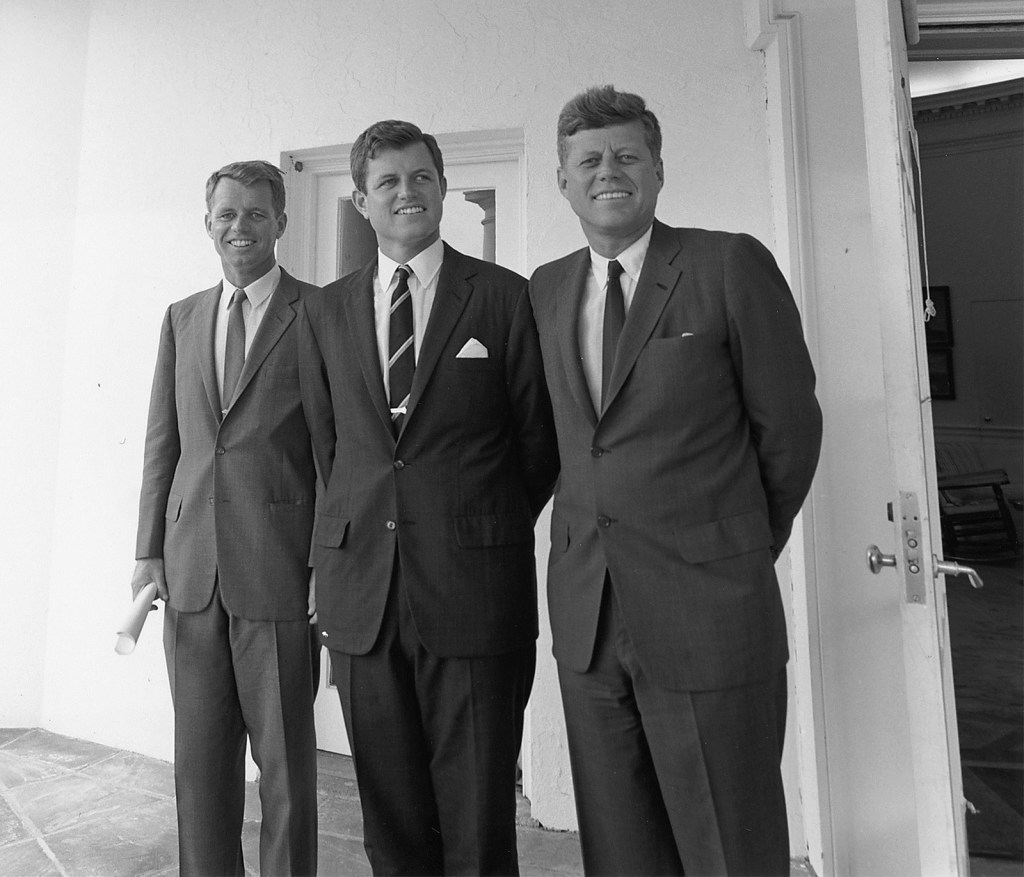
While financial stability is without a shadow of doubt necessary my time spent with my friends at school who came from different backgrounds proved that there was no direct link between being born in a wealthy family and being happy or fulfilled and realized that while more money made life easier it by no means made it more fulfilling. But if more money won’t necessarily mean more happiness then why was lack of it blamed for most of our emotional problems? I struggled with this question for years long after graduating from high school and entering college when one day I stumbled upon a quote by Robert F. Kennedy that said“ The gross national product does not allow for the health of our children, the quality of their education, or the joy of their play. It does not include the beauty of our poetry or the strength of our marriages; the intelligence of our public debate or the integrity of our public officials. It measures neither our wit nor our courage; neither our wisdom nor our learning; neither our compassion nor our devotion to our country; it measures everything, in short, except that which makes life worthwhile.”

Robert F. Kennedy famously criticized considering Gross Domestic Product as the sole scale by which the well-being of a nation is measured

That was when it hit me! Blaming “not enough money” and its relentless pursuit at the expense of everything else was what had turned the lives of two groups of people into a living nightmare: the very needy and the very greedy for both of whom there was never enough money to go around! Right then and there I realized that while money cannot make one happy, poverty can make one unhappy and materialistic greed could make one unhappier still! That was when I realized that there is no nobility in poverty and that there was nothing wrong with bettering one’s financial situation, however, pursuit of one’s material well-being should never occupy one’s mind to the point where there is no space left for what makes life truly worth living. That is why I have always believed nations should aspire to go beyond Gross Domestic Product (GDP) to measure the happiness of their citizens and instead set new benchmarks for what truly increase the quality of the lives of their citizens.

Gross National Happiness index is precisely the answer to this issue which has already been implemented by many nations around the world. GNH measures the following among other things:

  • Psychological wellbeing
  • Health
  • Education
  • Time use
  • Cultural diversity and resilience
  • Good governance
  • Community vitality
  • Ecological diversity and resilience
  • Living standards
GNH needs to be taken into consideration to determine key national policies

The world today is in one of its worse economic shapes since the Second World War but as we take measures to tackle our economic issues to boost the GDP we should not forget the words of Robert F. Kennedy and promote the idea that fulfillment is as much about our way of thinking as it is about our way of spending, remind ourselves that management of our investment portfolio should be accompanied by taking stocks of our values, emotional well-being, and true calling in life, and emphasize on the importance of our most intimate relationships and their impact on our life satisfaction. Now more than ever we need to go beyond GDP and include all other things that contribute to a life well lived!

Daniel Molgan
Written by Daniel Molgan


#happiness #leadership #personaldevelopment #economy #wellbeing #nations #recovery#Danmolgan #Danielmolgan

Personal Development

Sustainable Present on the Path to a Promising Future

The Clock of the Long Now with its prototype at the science museum in London and its full scale $42 million version funded by Jeff Bezos and under construction in Texas is a clock that is meant to keep time for the next 10,000 years and while the full scale project drew quite a bit of controversy it was meant to clearly point out the following: it is only when we expand our horizons and take a glance at the distant future when we finally become capable of truly making good decisions.

The Clock of the Long Now is a symbol of long term thinking to be passed along to future generations

The founder of Amazon himself talked extensively about why he poured so much money in such a seemingly irrelevant project to which he responded by saying that for him this project was a metaphor that he intended to share with the rest of the world and the generations to come. This metaphor is predominantly about promoting future thinking and a long-term perspective among all citizens of the world given that Jeff Bezos himself attributes his success to the ability to go beyond the noise of the present and focus on the aspirations of the future which then allowed him to do things that at his time seemed unnecessary. “Why buy a book online and wait for it to be delivered when you can just walk into a bookstore, smell the coffee, enjoy the scenery, touch the books, and select the one that you want?” Or so said many who could not understand why a website with the bizarre name of Amazon would ever turn such an idea into a online store. Fast forward to decades and now Amazon is the fourth highest valued corporation in the world and it not only sells books more than any other bookstore, it sells just about anything available in the market.

The success of Amazon is more than anything attributed to Jeff Bezos’s patience on letting small things grow into large ones over a long time

Long-term thinking and taking into consideration the abstract concept of the future which is by no means real and then taking action in the present moment based upon that ideal is not something that comes to us naturally. After all, humans have evolved as hunters and gatherers who spent most of their time looking for food and due to our inability to store food we had to keep repeating this process perpetually without much concern for the future. Even at the dawn of the agricultural age our future perspective was limited to the next two seasons and almost nobody planned their lives beyond that. Yet when we take a look at the majority of successes in the modern world we realize that almost all of them were the result of long-term thinking that went far beyond the next two seasons and took into consideration all the possible events that could occur in decades to come.

Merely expanding one’s vision allows one to be able to make better decisions in the long run

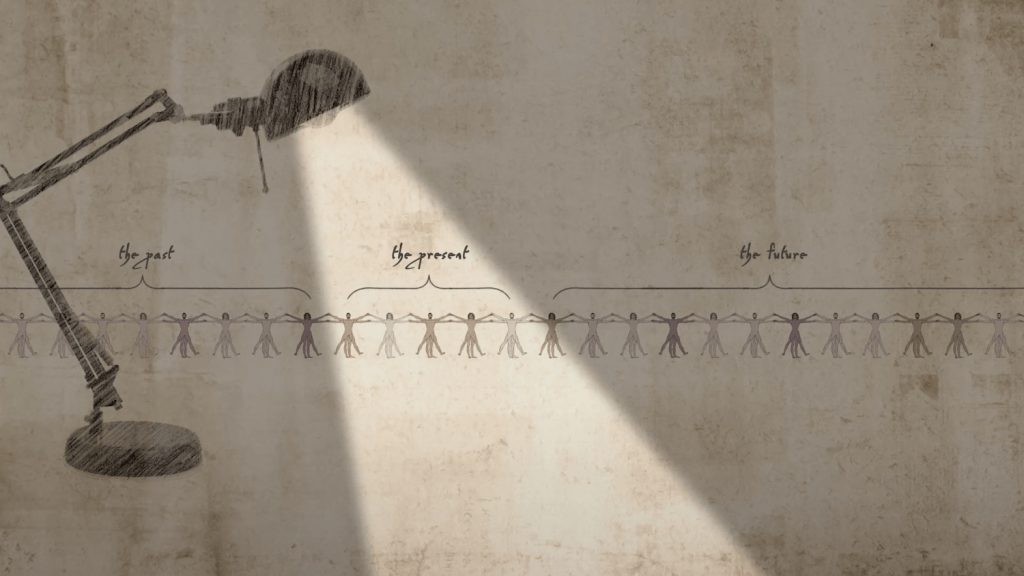
That is why today I would like to encourage you the reader to take into consideration all the decisions you have made so far and make an honest assessment of how many of those decisions were made with your ideal future in mind. Alas, in most cases we realize that we ended up making our decisions in the heat of the moment and often to our detriment which is why having such symbols as the Clock of the Long Now can be a wake up call and a reminder that if we are to look back at our lives a decade from now and be proud of all the decisions that we have made by then we need to start shifting our perspective towards the long term and make decisions in a way that will benefit us in the future. It is worth mentioning that having a future perspective does not imply abandoning the present, quite the contrary, by abandoning our pursuit of making the present happy and enjoyable we will also sabotage our future given that neglecting the present for the sake of the future can only be maintained for so long before we realize that we have no motivation left to continue on this path.

On the path to building a promising future taking care of the present should not be neglected

In this regard the keyword here is “sustainability” and if we are to win we need to make sure our present is sustainable and we cannot sustain the present if we are to fully neglect it. Hence, it is best to maintain a balance between the present and the future. Only attempting to enjoy the moment is as unsustainable as an incessant obsession with the future at the cost of the present, however, by dividing our attention equally between making the present as pleasant as possible while planning logically and working ambitiously for a bright future we are sure to have the best of both worlds which ironically is one of the key elements of sustainable success and happiness. Let us enjoy the present moment but also remember that The Clock of the Long Now is ticking!

#success #motivation #inspiration #planning #management #selfdevelopment #Danmolgan #Danielmolgan

Daniel Molgan
Written by Daniel Molgan
Personal Development

Success is Goals and All Else is Commentary

Wherever you glance and spot the manifestations of happiness, fulfillment, and success you will almost invariably trace it all the way back to a life devoted to the pursuit of goals that are considered to be important and meaningful for the individual who pursues them. On the contrary, the origin of all forms of negativity, passivity, jealousy, and underachievement is rooted in one’s inability or unwillingness to set clear goals along with a plan and a commitment to accomplish them. That is precisely why it is said that success is goals and all else is commentary!

Any form of success in any field comes down to setting and achieving specific goals

The truth of the matter is that all humans are goal seeking organisms and in fact whenever we are laying the foundation for a Fortune 500 company, browsing through social media, sunbathing on the beach, or worrying about an upcoming exam or anything else we are indeed trying to achieve a specific goal but the difference is in whether we are consciously aware of this process and thus choose our goals with a great deal of care and consideration or simply drift in life and react to what occurs and in the process pursue random goals that are the byproducts of the environment.

Just like a beautiful garden is rarely formed through natural causes a fulfilling life is in most cases not a result of following random goals fueled by impulse but rather it is an output of a more conscious approach to life marked by planning, deliberate practice, and committed pursuit of a worthy ideal. Alas, this manner of thinking is rarely if ever taught to us as we go through the educational system and in most cases goal setting and goal attainment are not developed among children by parents since often the parents themselves have no clue as how to live a goal oriented life.

Just like a beautiful garden cannot come about without the constant care of a gardener a fulfilling life needs one to sow the seeds of goals and reap the rewards following their fruition

This immense desire for meaning and purpose has always been at the core of what makes us humans and until recently religions and traditions used to satisfy this need, in most cases a trade off that gave individuals a clear set of objectives in exchange for financially and politically benefiting the church or the overall well-being of the society. Yet, given that in the 21st century religion gradually loses influence worldwide and individualism takes precedence over collectivism the pull of religion and traditions will be less and less capable of supplying a sense of meaning and identity for individuals and in a world where all affairs can be done at the speed of light we need to take a more serious look at the education of goal setting and goal achievement or else we have to risk becoming the victims of consumerism and unending entertainment which tend to afflict those with lack of clear goals much more than the ones who are actively pursuing their objectives and thus cannot afford such distractions.

Clear goals set and articulated to every member of a team is the key to the success of that group

While goal setting is the true art of life, knowing yourself is the true art of goal setting; after all not all goals are made equal and choosing our path in life in a way that makes use of our strengths and reduces the dependence on our weaknesses will certainly lead to a happier and more harmonious existence. Many argue that working on getting rid of our weaknesses can improve the quality of our lives and while that is without a shadow of doubt true, the fact of the matter is, that our focus in life should not be merely on correcting what is wrong with us but rather to tap into our strengths and use them as a means of achieving excellence. Hence, best goals are the ones that make use of your inherent strengths and are less hindered by your weaknesses which in turn allows you to do easily accomplish what many find hard to do. Just imagine a world where most are indeed doing that, such a world will be filled with more excellent individuals doing what they like and do best which in turn serves not only themselves but also those around them. Such a society is engineered for success, tailored for happiness, and paves the way for a both individualistic and collectivist sense of fulfillment.

Choosing the right goal plays a crucial role in determining how competitive you are and how much of your strength is used in the pursuit of your goals

In conclusion it ought to be mentioned yet again that success is goals and all else is commentary and the moment we internalize this concept, and simultaneously help those around us to grasp it, we are becoming the masters of our destiny instead of victims of our circumstances!

Daniel Molgan
Written by Daniel Molgan

#success #mindset #personaldevelopment #motivation #inspiration #entrepreneur #happiness #goals #goalsetting #achievement #Danmolgan #Danielmolgan